Rice Transliteration Scheme (RTS)
The Rice Transliteration Scheme (RTS) provides a simple intuitive way of scribing telugu using the English
script.
If you are new to RTS, here is a simple primer.
Before starting, understand that
-
Your intuition usually works, so just experiment
and you will find that most of the time you guessed right.
-
There is more than one correct way
to wRITe the same text.
Since there is more than one way, different styles of RTS have
evolved over time. The one being presented here is noted for
extensive mixing of lower case and upper case letters. Beginners
don't like it because their eyes aren't used to seeing capital
letters in the middle of words. On the other hand, this saves a lot
of typing and if you comprehend the following four rules, makes complete sense.
Four rules of capitalization:
- Use capitals for dIrghAlu, e.g. ka, kA, ki, kI, ku, kU
- Use capitals for stress e.g. anuBavamu is the same as anubhavamu
- Use capitals to distinguish Ta (as in ciTa paTa) vargamu
from ta (as in mamata) vargamu. So, it is Ta Tha Da Dha Na before
ta tha da dha na
- Use capitals for the less used variant of the same letter. e.g.
melika Sa (as in SarIramu) to distinguish from sa (as in saMgItamu).
Most beginners seem to have trouble when transliterating
ఇ . RTS uses 'i' rather than
'e' for this. e.g.
ikkaDa (
ఇక్కద ) and ekkaDa (
ఎక్కద).
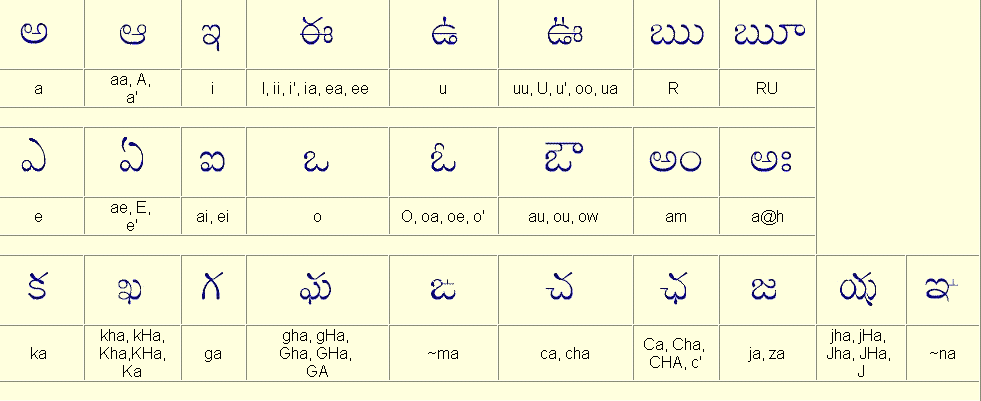
Finally, here is one way of writing telugu alphabet using RTS.
| a A i I u U R Ru e E ai o O au aM a@h |
అ ఆ ఇ ఈ ఉ ఊ ఋ ఋఉ ఎ ఏ ఐ ఒ ఓ ఔ అం అః |
| ka Ka ga Ga ~ma |
క ఖ గ ఘ ఙ |
| ca Ca ja Ja ~na |
చ ఛ జ ఝ ఞ
|
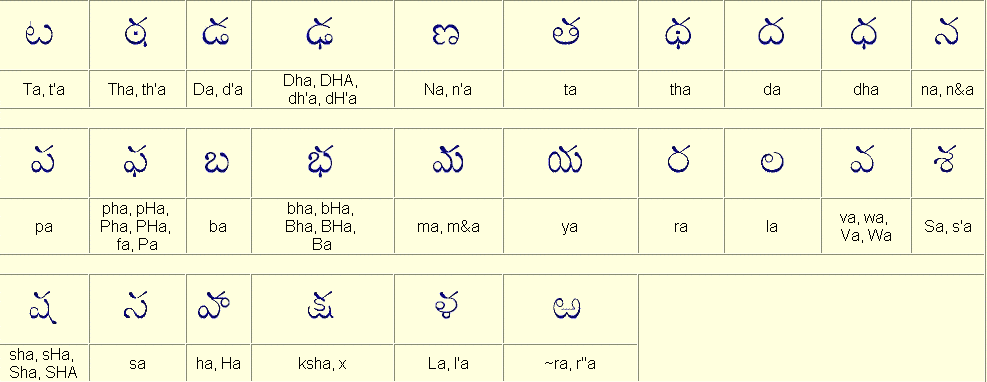
| Ta Tha Da Dha Na |
ట ఠ డ ఢ ణ |
| ta tha da dha na |
త థ ద ధ న |
| pa Pa ba Ba ma |
ప ఫ బ భ మ |
| ya ra la va Sa sha sa ha La ksha ~ra |
య ర ల వ శ ష స హ ళ క్ష ఱ |
A more complete listing is given below: